
Yarmouth City Directory Holdings
Verified Yarmouth directory evidence is scattered across several custodians. The Massachusetts State Library holdings list confirms Yarmouth directories for 1895 and 1901, along with Yarmouth voting lists for 1924, 1980, and 1988. The National Archives identifies a Barnstable, Falmouth, and Bourne regional volume with Yarmouth-related coverage for 1903, 1908, 1926, and 1929. Those dates establish editions or collection leads, not a complete year-by-year run. Check the title page, catalog entry, and relevant pages before treating an item as a full town directory.
| Collection | Years | Where Held | Access |
|---|---|---|---|
| State Library Yarmouth directories | 1895, 1901 | Massachusetts State Library holdings | Confirm call number or reproduction route with staff |
| Yarmouth voting lists | 1924, 1980, 1988 | Massachusetts State Library holdings | Historical electorate evidence, not a full resident roll |
| Barnstable/Falmouth/Bourne regional volume | 1903, 1908, 1926, 1929 | National Archives listing | Confirm Yarmouth pages in the volume |
| Yarmouth annual reports | 1869 to present, plus an 1860 report lead | Yarmouth, State Library, and Archives routes | Reports can fill a directory gap |
Use the table as a checklist, not as proof of uninterrupted coverage. No source in the research establishes a final printed Yarmouth directory year, a complete publisher run, or the layout of every local edition. A missing edition is a real evidence limit. Note it, then move to the next available source instead of guessing what the absent pages would have shown.
Verified Yarmouth Directory Years
The 1895 lead is described in catalog and book material as a J. H. Hogan Co. publication from Hyannis, but the local shelf scan still needs inspection before an entry format is quoted. The 1901 holding is likewise a confirmed collection fact. For the four regional years, use the National Archives directory listing to locate the broader volume, then determine whether Yarmouth is indexed by town, village, or another regional arrangement. South Yarmouth, West Yarmouth, Yarmouth Port, and Bass River may appear as local labels without becoming separate municipalities.
That naming detail matters when a surname does not appear at first. Search Yarmouth and the village wording printed in the volume. Check an address and nearby entries as well. A business advertisement or social listing can be a useful lead, but it does not establish continuous residence. Note: A directory dates a relationship between a person and a printed entry, not every day that person lived in Yarmouth.
- 1895: the State Library confirms a Yarmouth directory holding, with local page layout still to be inspected.
- 1901: a second Yarmouth directory holding is verified by the State Library list.
- 1903 and 1908: NARA lists Yarmouth-related coverage in the Barnstable, Falmouth, and Bourne regional volume.
- 1924: the State Library lists a Yarmouth voting list, a different record type from a full directory.
- 1926, 1929, 1980, and 1988: NARA regional dates and later State Library voting-list years add distinct historical checkpoints.
Yarmouth Historical Shelf Routes
Yarmouth Port Library is the local branch HSOY identifies for annual town reports and nearly complete Massachusetts town vital-record books through 1850. South and West Yarmouth libraries are useful database access points, while the Yarmouth Libraries resource page routes readers to genealogy and newspaper resources. Sturgis Library's Lothrop Room is the archive and microfilm fallback, and staff ask visitors to call 508-362-6636 to reserve or seek help. FamilySearch can be searched free with registration, although a catalog item may still carry a camera or film restriction.
The December 2025 town notice says Ancestry Library Edition returned at the South and West branches on December 1, 2025. The earlier newspaper-provider change still makes Sturgis a practical fallback for the Yarmouth Register and Barnstable Patriot. Ask a librarian which database, reel, or collection is available on the day of the visit. Bring surname variants, a date range, and the exact question. Record the collection name, box or reel, page, and date of use.
State Library holdings establish that a volume exists, not that a downloadable scan is complete or available. Ask for the call number and reproduction policy. HSOY is at 229 Old King's Highway, Route 6A, in Yarmouth Port, with public Wi-Fi, a copier, scanner, and air printer available for research visits. Its phone is 508-362-3021 and research questions may be sent to info@hsoy.org.
Yarmouth House Files
The Historical Society of Old Yarmouth, or HSOY, adds a local layer that a directory alone cannot provide. Its archive describes books, pamphlets, family files, member-submitted genealogies, diaries, maps, photographs, postcards, and a card catalog cross-referenced by family name. The Yarmouth Houses file covers most older houses and can point to National Register or MACRIS material. Appointments are strongly suggested, but staff and volunteers can gather material. Simple questions have no charge, with donations appreciated.
The HSOY house-history resource shows the kinds of files, maps, photographs, and research support available for a Yarmouth directory lead.
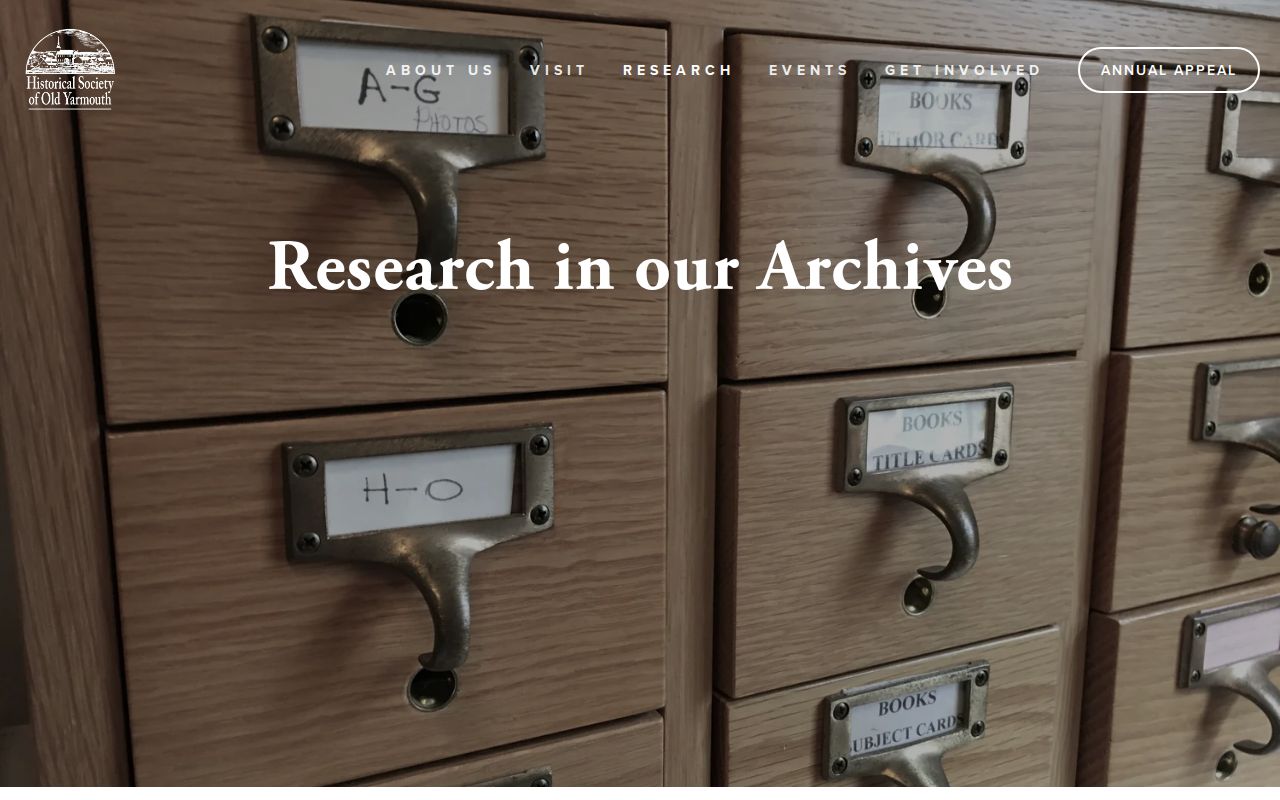
Pair an address from a Yarmouth directory with the house file, then preserve which fact came from which source. HSOY also identifies maps dated 1795, 1830, 1858, and 1880, plus a map book that follows each village through time. That is especially useful when an older printed location looks unfamiliar on a current map.
Reading a Yarmouth Directory Entry
Begin with the exact spelling on the page. Directories are generally alphabetical by resident and address, and some include house guides by address, business sections, or advertisements. The local scan is required before claiming that any one Yarmouth volume has a reverse section. If it does, the street section can turn an address into a listed household. Capture the surrounding heading and the abbreviation key with the entry. They often explain what a short mark means better than a later transcription can.
| Name | The printed surname, given name, initials, or former-name variant used by the volume. |
|---|---|
| Address | The street and number exactly as printed, which may use a village label or an older street form. |
| Business or occupation | Historical context supplied by the directory, not proof of a current identity or activity. |
| House guide entry | A street-order listing, when the particular volume includes one, that may connect an address to a listed name. |
| Advertisements and affiliations | Context clues that should be checked against independent records before they are treated as fact. |
- Criss-cross directory
- A street-order directory that may list a location before a name. Confirm that the specific Yarmouth edition has this section.
- Householder index
- An index organized around the household or address rather than only a surname alphabet.
- Abbreviation key
- The printed explanation of shortened terms and marks. Photograph it with the entry so later notes remain readable.
Yarmouth Directory Gaps
When a directory year is missing, Yarmouth annual reports can provide births, marriages, deaths, town officers, appropriations, road work, and community names. HSOY links annual reports, newspapers, cemetery material, deeds, maps, and libraries from its local research links. The Yarmouth Register and Barnstable Patriot can supply obituaries, property notices, society events, and advertisements. Their value is a dated lead that can be checked, not a substitute for a vital record or deed.
Early cemetery evidence needs the same care. HSOY notes that seventeenth-century Cape markers may have been wood or rocks, so the absence of a surviving stone does not prove a family was absent. Compare cemetery information with a town report, directory, deed, family file, or newspaper notice. Note: Keep a gap in the timeline when the sources stop. A clean-looking continuous story can conceal an unsupported leap.
Trace Yarmouth City Directories
Use a household sequence, not a single isolated entry. Start with the first verified edition that may contain the name, then move forward and backward through the surviving years. Record each address exactly, including its village wording. Compare neighboring entries only as a way to generate more records to check. The directory collections establish leads; the Yarmouth resident lookup route is better suited to confirming a present-day record through the appropriate official custodian.
- Find the surname, initials, and address in the first available edition. Save the title page, page number, and printed heading.
- Search the next surviving edition for the same name, former surname, initials, and nearby address numbers.
- Check any verified street or house-guide section, while noting that the layout can differ from one edition to another.
- Place the directory date beside the closest available census year, town report, newspaper notice, or voting-list year.
- Test a disappearance with an obituary, cemetery source, deed, family file, or later directory before deciding whether the household moved or died.
A person may disappear because the volume changed scope, used another name, omitted boarders or seasonal residents, or simply did not survive. An owner can appear at a mailing address while another household occupies the property. Keep each conclusion narrow: a record supports a name at an address on a date, unless another source proves more.
Yarmouth Directory Maps
Maps help translate a printed address into a built place. The State Library Sanborn list identifies Yarmouth sheets for November 1932, 1932 to 1938, and 1959. Use the State Library Sanborn listing to identify an edition, then use the Library of Congress search guidance to work through sheet metadata. A Sanborn map can show footprint and use context, not title or continuous occupancy.
HSOY's older maps and the town's historical materials may explain a village name or street layout that a modern source does not use. Save a map edition and sheet number beside the directory page. That makes a future comparison possible when road patterns, house numbers, or local labels differ.
Yarmouth Directory Notices
Newspapers and annual reports are the best companions when a directory has a blank stretch. Search an exact name, address, and date range, then save the publication title, page, and issue date. HSOY, the libraries, and Sturgis are the local access chain when one online database fails. The July 2024 notice documented a newspaper-access transition, while the later December 2025 notice restored branch Ancestry access. Availability changes, so confirm the current route with the library before planning a visit.